RSS

Monthly Archives: September 2025

The Essential Guide to Using Manual Torque Wrenches for Precision Work

Manual torque wrenches are indispensable tools for industries ranging from automotive and aerospace to manufacturing and maintenance. Ensuring components are tightened to exact specifications prevents damage, reduces safety risks, and improves product reliability. This guide provides a comprehensive overview of using manual torque wrenches for precision work and highlights leading manufacturers. 

Understanding Manual Torque Wrenches 

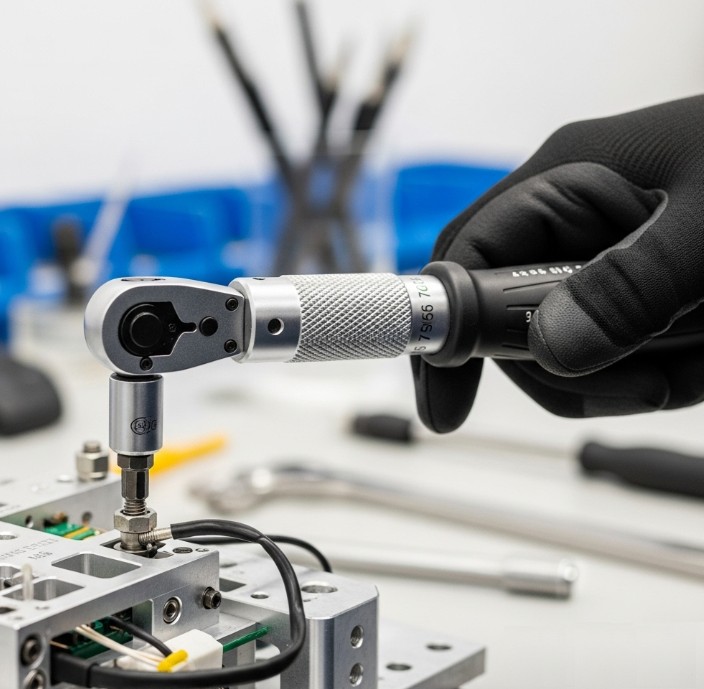
Manual torque wrenches are calibrated tools that measure the rotational force applied to fasteners. They help achieve precise torque settings, which is critical in applications where overtightening or undertightening can lead to failure. 

Types of Manual Torque Wrenches 

  • Click-Type: Produces a click sound when the desired torque is reached. 
  • Beam-Type: Uses a deflection indicator to display torque. 
  • Dial-Type: Features a dial gauge for visual torque readings. 
  • Micrometer/Adjustable Wrenches: Allow precise torque adjustment with a pre-set scale. 

Applications Across Industries 

Manual torque wrenches are vital in sectors where precision is non-negotiable: 

  • Automotive: Engine assembly, suspension, brakes 
  • Aerospace: Aircraft assembly, maintenance 
  • Manufacturing: Machinery, electronics, assembly lines 
  • Bicycles & Motorcycles: Component adjustments 
  • Construction: Structural fasteners 

Recommended Practices for Precision Work 

Calibration 

Regular calibration is essential to maintain accuracy. Most professionals recommend calibrating tools annually or after significant use. 

Proper Handling 

  • Use wrenches within their torque range 
  • Apply force smoothly and steadily 
  • Avoid using extensions or adapters that can alter torque 

Storage 

  • Keep in a protective case 
  • Store in a dry environment 
  • Avoid dropping or heavy impact 

Global Leaders in Manual Torque Wrench Manufacturing 

Here are ten prominent manufacturers known for reliability and precision: 

  1. Snap-on Tools
  2. Park Tool
  3. Wera Tools
  4. Torque-Tech Precision Co., Ltd
  5. Gedore
  6. Topeak
  7. Pro Bike Tool
  8. Stahlwille
  9. Feedback Sports

These companies consistently deliver high-precision wrenches, gaining trust across multiple sectors. 

Choosing the Right Manual Torque Wrench 

Consider the following factors to select an appropriate wrench: 

  • Torque Range: Match the wrench to your application’s requirements. 
  • Accuracy: Check the wrench’s tolerance level. 
  • Type: Click, beam, dial, or micrometer depending on preference. 
  • Build Quality: Stainless steel, ergonomic handles, and durability. 
  • Calibration Support: Access to service centers or calibration certificates. 

Advanced Tips for Professionals 

  • Use Consistent Technique: Maintain steady hand pressure for consistent torque. 
  • Verify Settings: Double-check torque settings before final application. 
  • Record Data: Keep logs for critical assembly work. 

Conclusion 

Mastering the use of manual torque wrenches ensures reliability, safety, and efficiency across industries. By understanding types, applications, and maintenance best practices, professionals can achieve consistent results. Utilizing tools from leading global manufacturers like Torque-Tech Precision Co., Ltd ensures high-quality performance. Manual torque wrenches remain a cornerstone of precision engineering, and staying informed about top models and manufacturers empowers users to maintain professional standards and maximize operational efficiency. 
 
Leave a comment

Posted by on September 17, 2025 in Uncategorized


How to Choose a Reliable End Mill Manufacturer

In today’s highly competitive machining and tooling industry, selecting the right end mill manufacturer goes far beyond price. A reliable manufacturer is a strategic partner who can ensure stable quality, reduce downtime, and provide the technical support necessary for long-term success. This guide highlights the key factors to consider when choosing your next tooling partner.


1. Key Indicators for Evaluating a Manufacturer

When comparing manufacturers, purchasing managers and engineers should carefully evaluate these core areas:

  • Product Quality and Consistency
    • Check if the manufacturer uses high-grade tungsten carbide materials produced with advanced powder metallurgy.
    • Review precision standards: ISO, DIN, or JIS compliance ensures consistency across batches.
    • Ask for quality inspection reports or third-party certifications to confirm credibility.
  • Delivery Reliability and Lead Time
    • A good manufacturer should maintain adequate inventory and stable production capacity.
    • On-time delivery reduces costly downtime and keeps your production schedule stable.
  • After-Sales Support and Technical Expertise
    • Look for manufacturers that provide cutting parameter recommendations, tool selection advice, and troubleshooting guidance.
    • Value-added services such as regrinding, re-coating, or custom-made solutions can help extend tool life and reduce costs.

2. Beyond Price: Evaluating Manufacturer Capabilities

Price is often the first thing buyers notice—but in the world of precision machining, lowest cost does not equal best value. Instead, focus on the manufacturer’s overall capabilities:

  • Innovation and R&D
    • Does the manufacturer continuously invest in tool geometry design, coating technology, or advanced CNC grinding equipment?
    • Innovative manufacturers can help you stay competitive as machining challenges evolve.
  • Industry Applications
    • Manufacturers with experience in automotive, aerospace, mold-making, or medical device industries are often more versatile.
    • They can provide application-specific solutions that reduce trial-and-error costs.
  • Scalability and Partnership Potential
    • A strong manufacturer can grow with your business, supplying both small-batch customized tools and large-volume production runs.
    • Long-term partnerships reduce hidden costs associated with frequent manufacturer changes.

3. Building a Long-Term Partnership

The most successful companies don’t just buy tools—they build strategic partnerships with their manufacturers. A trusted manufacturer should:

  • Provide transparent communication and proactively share new product updates.
  • Offer training or knowledge-sharing sessions to improve your team’s machining efficiency.
  • Act as a problem-solving partner rather than just a product vendor.

4. Recommended Manufacturer

When searching for a reliable partner, consider established tooling specialists such as JIN LI CHENG. With years of expertise in end mill manufacturing, the company emphasizes:

  • High-precision production standards that meet global quality benchmarks.
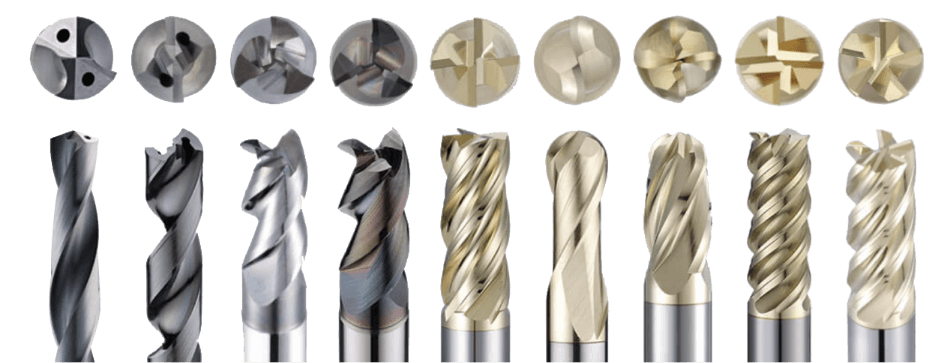
  • Flexible solutions ranging from standard to customized end mills.
  • Strong after-sales service to support customers in different industries worldwide.

This kind of manufacturer demonstrates how quality, service, and long-term reliability matter more than price alone.


5. Conclusion

Choosing a end mill manufacturer is not just a procurement decision—it’s a strategic move that impacts machining quality, production costs, and your company’s competitiveness. By focusing on quality, delivery, technical support, and partnership potential, you can build a supply chain that sustains growth.

If your company is seeking a reliable tungsten carbide end mill partner, explore trusted manufacturers like JIN LI CHENG to secure high-quality tools backed by professional service.

 
Leave a comment

Posted by on September 15, 2025 in Manufacturer


Tags: ,

Custom vs Standard Worm Gears: Finding the Right Fit for Industrial Applications

Worm gears are essential in industries that rely on compact, high-torque transmission systems. Deciding between custom worm gears and standard worm gears involves evaluating factors such as design flexibility, performance needs, cost efficiency, and delivery schedules. This article explains how each option supports industrial applications differently, highlights comparison points, and introduces leading manufacturers to help you make an informed choice.


The Role of Worm Gears in Industry

Worm gears are widely used in:

  • Conveyor systems in manufacturing plants
  • Lifts and hoists in construction and mining
  • Robotics and automation equipment
  • Automotive steering and power transmission systems

Their ability to provide quiet operation, durability, and high reduction ratios makes them indispensable across multiple industries.


Standard Worm Gears: Efficient and Practical

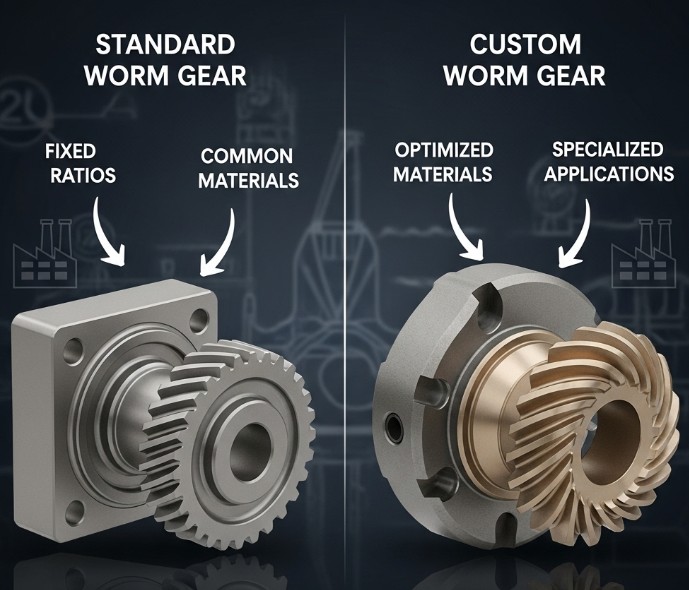
Standard worm gears are produced in predefined dimensions and gear ratios. They are readily available and suitable for industries prioritizing quick sourcing and predictable performance.

Advantages:

  • Lower unit cost
  • Readily available through distributors
  • Proven reliability in standard machinery

Limitations:

  • Less adaptable to unique designs
  • Limited lifespan in demanding conditions compared to custom options

Custom Worm Gears: Precision for Specialized Needs

Custom worm gears are engineered for specific load requirements, shaft configurations, or environmental conditions. Industries with critical safety standards or unique engineering challenges—such as aerospace, defense, or medical robotics—often prefer custom gear solutions.

Advantages:

  • Designed to meet exact load and dimensional needs
  • Enhanced durability and material options
  • Optimized performance for mission-critical equipment

Limitations:

  • Higher cost per unit
  • Longer production cycles due to design and testing phases

Comparison: Custom vs Standard Worm Gears

CriteriaStandard Worm GearsCustom Worm Gears
AvailabilityIn stock, ready to shipMade-to-order, requires design approval
Cost EfficiencyEconomical for bulk, everyday useHigher investment justified by specialized performance
Application ScopeGeneral machinery, conveyors, basic automationAerospace, robotics, defense, heavy-duty engineering
DurabilitySuitable for moderate workloadsDesigned for maximum lifespan under extreme conditions
Engineering FlexibilityFixed options onlyFully adaptable to customer requirements

Trusted Global Manufacturers of Worm Gears

Choosing a reliable partner is essential for long-term success in gear-driven applications. Below are five recognized global players:

  1. Orris Drive Incorporated – Known for developing advanced worm gear systems tailored to industrial clients worldwide.
  2. Boston Gear – Offers a wide portfolio of standard gears, widely adopted across North America.
  3. Zollern Group – German manufacturer specializing in high-precision gear solutions for aerospace and heavy-duty systems.
  4. HPC Gears – UK-based company that delivers both catalog-standard and engineered custom gears.
  5. KHK Gears – A Japanese producer with a global distribution network, offering both standard and special worm gear products.

Making the Right Decision

  • Opt for Standard Worm Gears when:
    • Your project needs fast turnaround
    • Cost efficiency is more important than customization
    • Applications involve common industrial machinery
  • Opt for Custom Worm Gears when:
    • Engineering requires precision tolerances
    • Safety standards are strict (e.g., aerospace, defense, medical)
    • Long-term performance justifies higher investment

Frequently Asked Questions

Q1: Do custom worm gears last longer than standard ones?
Yes, when properly designed, custom worm gears often use stronger materials and advanced coatings, extending service life.

Q2: Are standard worm gears suitable for heavy-duty applications?
They can be, but for extreme workloads or harsh environments, custom gears are usually more reliable.

Q3: What is the main trade-off between custom and standard worm gears?
It’s a balance between cost and lead time (standard) versus precision and flexibility (custom).

Q4: Can manufacturers provide hybrid solutions?
Yes, some companies offer semi-custom worm gears—standard bases with modifications—helping balance cost and customization.

Q5: Which manufacturer is best for global sourcing?
It depends on your requirements: Boston Gear for readily available standards, or Zollern and Orris Drive for precision custom solutions.


Final Thoughts

Custom and standard worm gears both play critical roles in industrial applications. Standard gears are reliable for common machinery and cost-sensitive projects, while custom gears excel in specialized environments demanding precision, durability, and innovation. Partnering with reputable suppliers such as Orris Drive, Boston Gear, Zollern, HPC Gears, and KHK Gears ensures your project has access to high-quality worm gear solutions tailored to its needs.

 
Leave a comment

Posted by on September 9, 2025 in Uncategorized


Design a site like this with WordPress.com
Get started